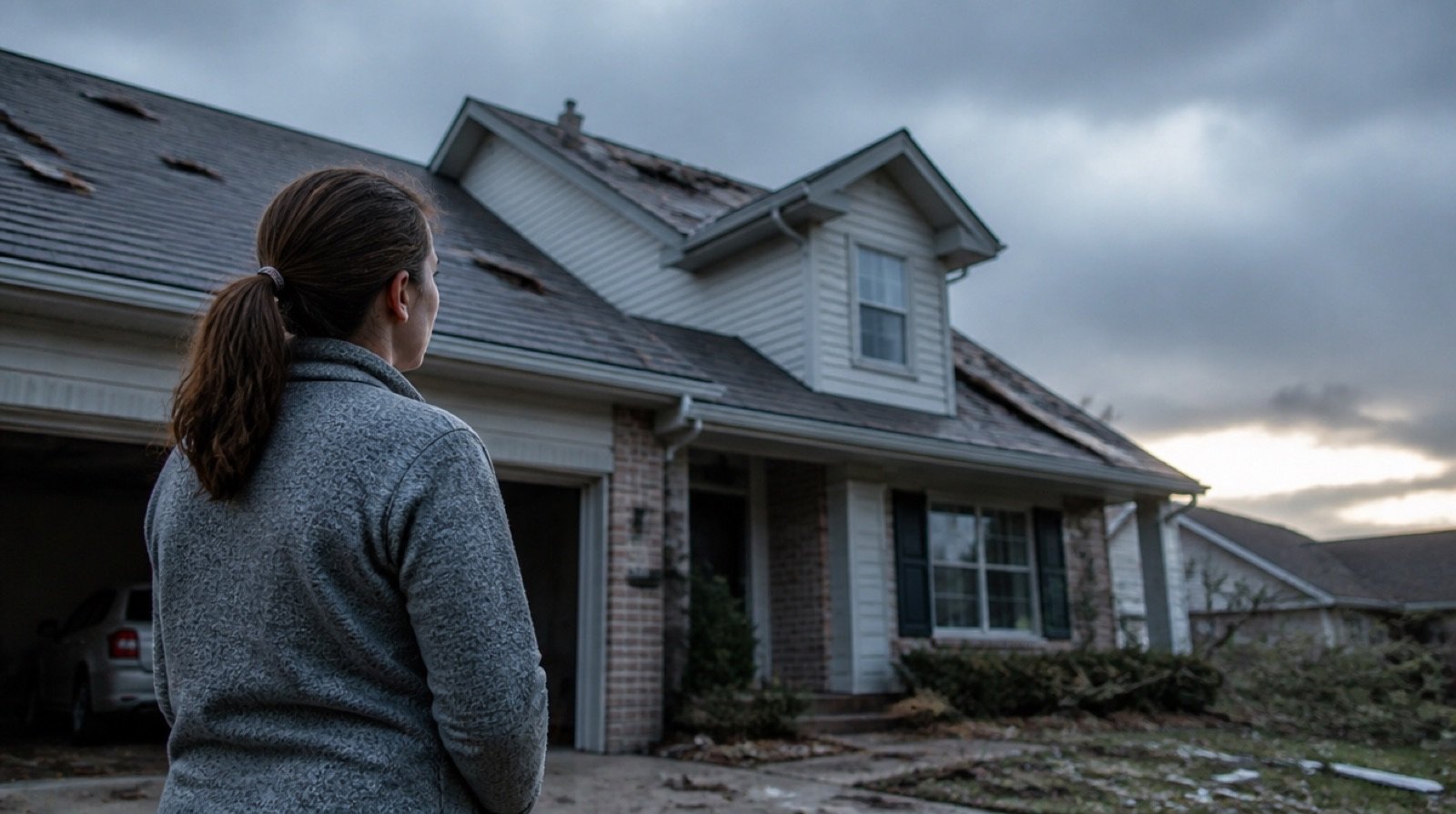
Independent claim intelligence
Your insurer has a playbook for your claim.
Now you have one too.
They do this every day. You will do it once, maybe twice in your life, while standing in your own driveway looking at your own roof.
One payment. 60-day unconditional refund. No calls, no subscription, no cut of your claim.
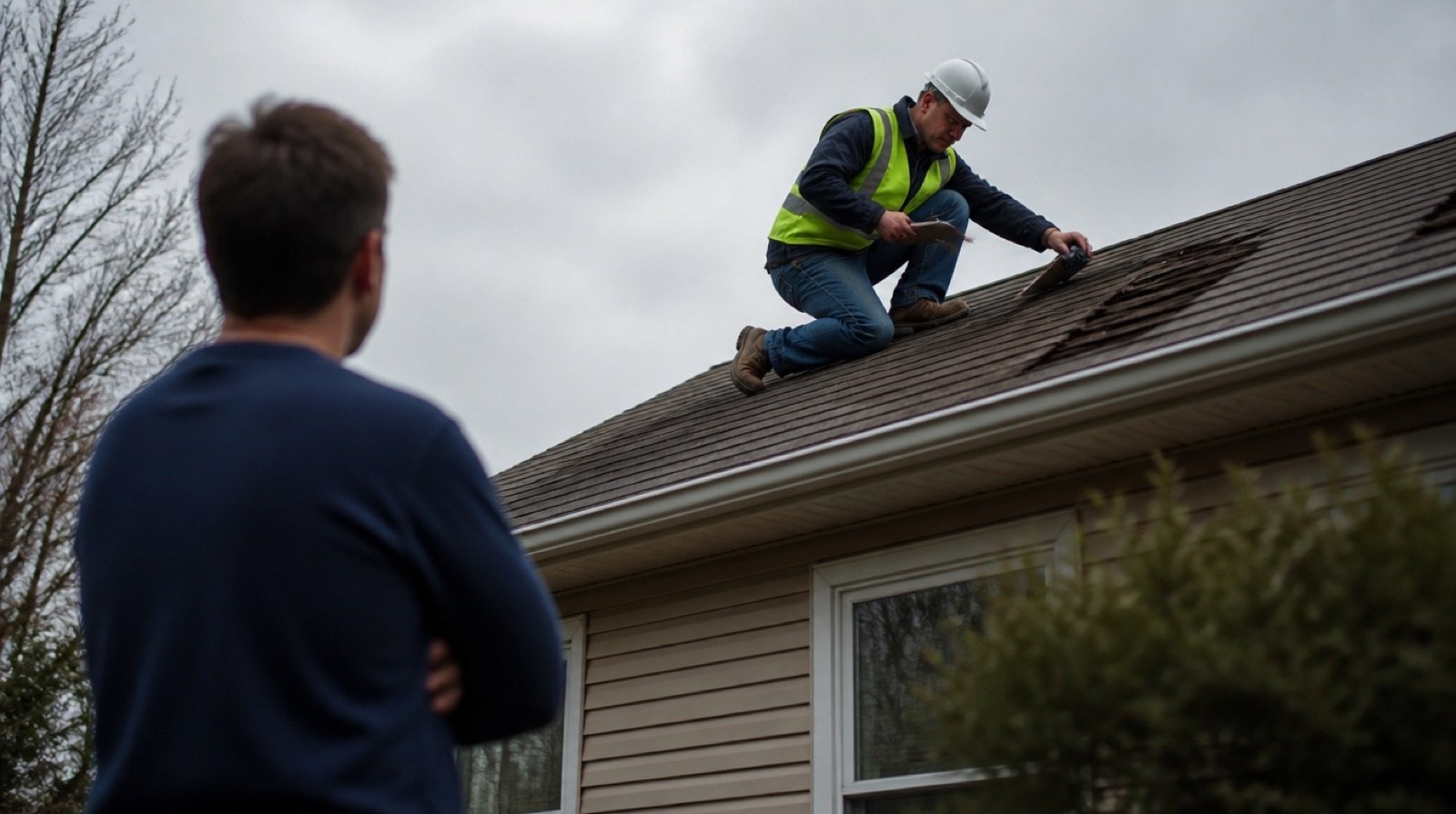
The actual problem
Everyone offering to help you is paid by the outcome.
Roofing companies publish free claim guides because they want the roof job. Public adjusters publish them because they want 15 to 25 percent of your settlement.
That is not a conspiracy. It is just how the money flows. But it leaves you as the only person at the table with no independent source of information, on the week you are making a five-figure decision.
The gap between what you are owed and what you are offered is information. Not luck, and not a better attitude on the phone.
One storm. Two adversaries. Both of them do this professionally.
The carrier
Estimating software with line items priced quarterly by ZIP code. Adjusters trained on internal scope guidelines. Wind claim severity rose 23.5 percent in 2024, and carriers responded by tightening when a full roof replacement gets approved.
The storm chaser
Out-of-state crews who work a hail region for a few weeks and leave. They no longer only knock. They arrive through geo-targeted ads within hours, with local-looking numbers and bought reviews. One in five roofing complaints to the BBB involves a stolen deposit.
"We'll waive your deductible." It is a proposal to commit insurance fraud, and in most states a homeowner who knowingly accepts becomes a party to it. It is also the single most common offer made after a storm.
What you get
The Storm Claim File
Insurers win disputes because they keep a file and you do not. This is how you keep the same file they keep, in the same language, on the same timeline.
The first 72 hours
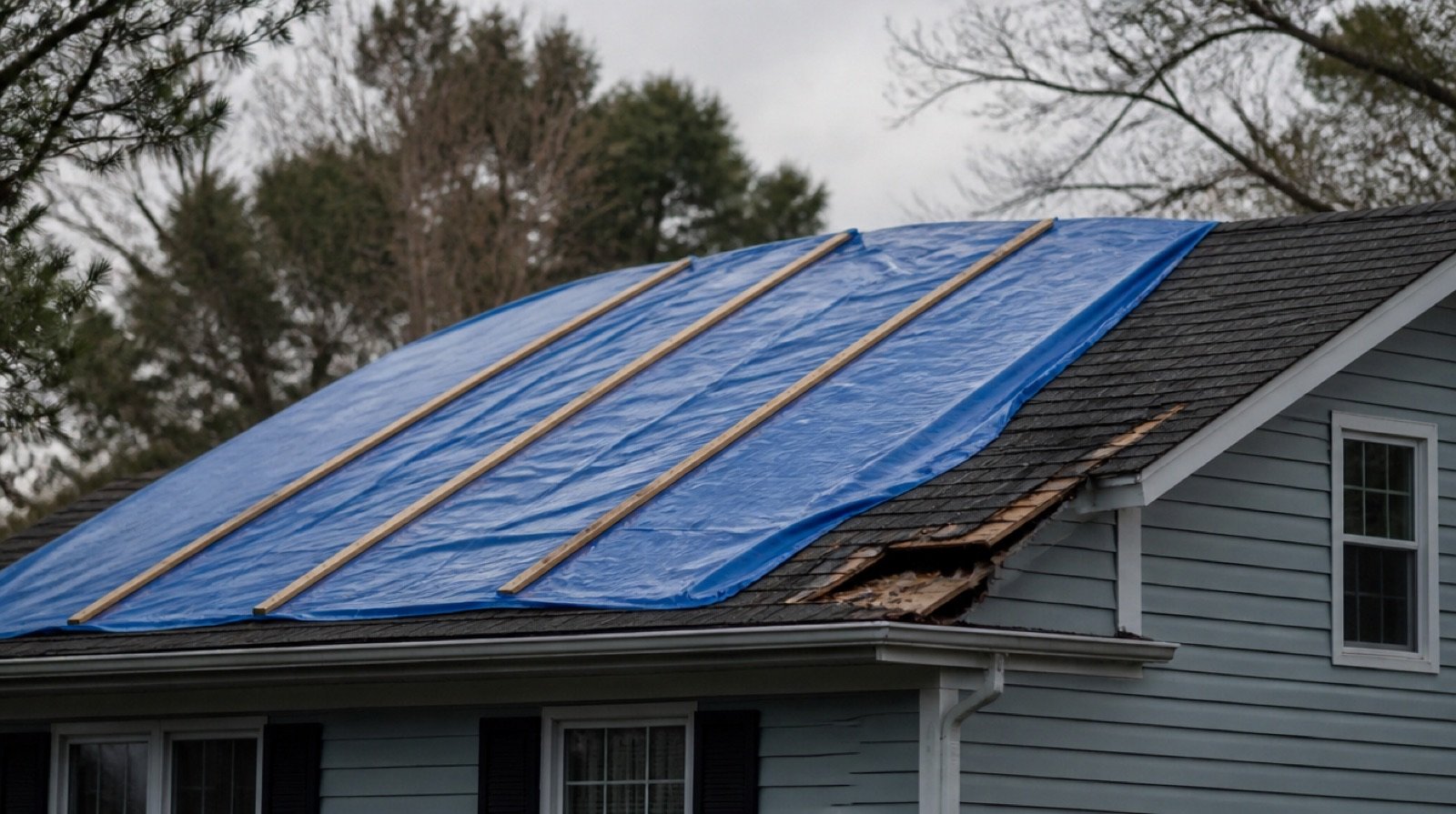
What to do, in order, before anyone arrives. The evidence you cannot recreate once a tarp goes on.
The evidence standard
How to photograph damage so it survives a challenge six months later. This is what you pay a public adjuster for.
Reading your own policy
The nine clauses that decide your payout, including the deductible that is far bigger than you think.
The adjuster visit
What actually happens, why being there changes the record, and the five sentences that cost people money.
Reading the estimate
The highest-value hour in the system. You cannot challenge a total. You can challenge a line.
When the number is short
Supplement, written basis, reinspection, state complaint, appraisal. In order, because order matters.
Hiring without getting burned
The screen that separates a crew passing through from a firm that exists when your warranty matters.
When to stop and hire
The honest one. The thresholds where a public adjuster or attorney is genuinely worth their fee.
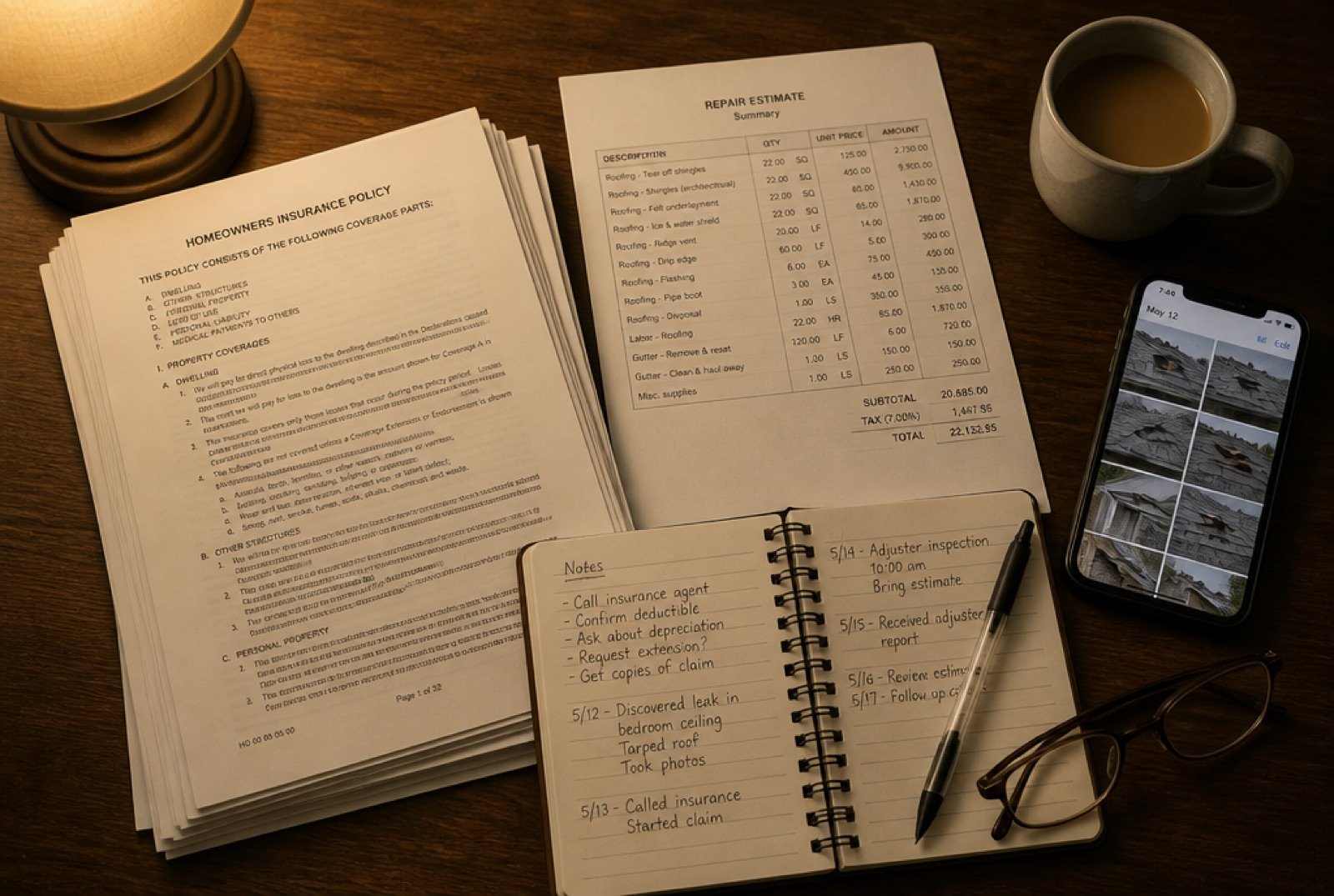
And the paperwork, written for you
Nine documents you send in your own name.
Not examples. Fill-in templates, in three formats, so you can work whichever way suits you: read it on your phone at the kitchen table, print it, or open the letters in Word and edit them.
A dated log of every call is the highest-leverage habit in the whole process, and it costs nothing. It also exists in every well-run claim and almost no badly-run one.
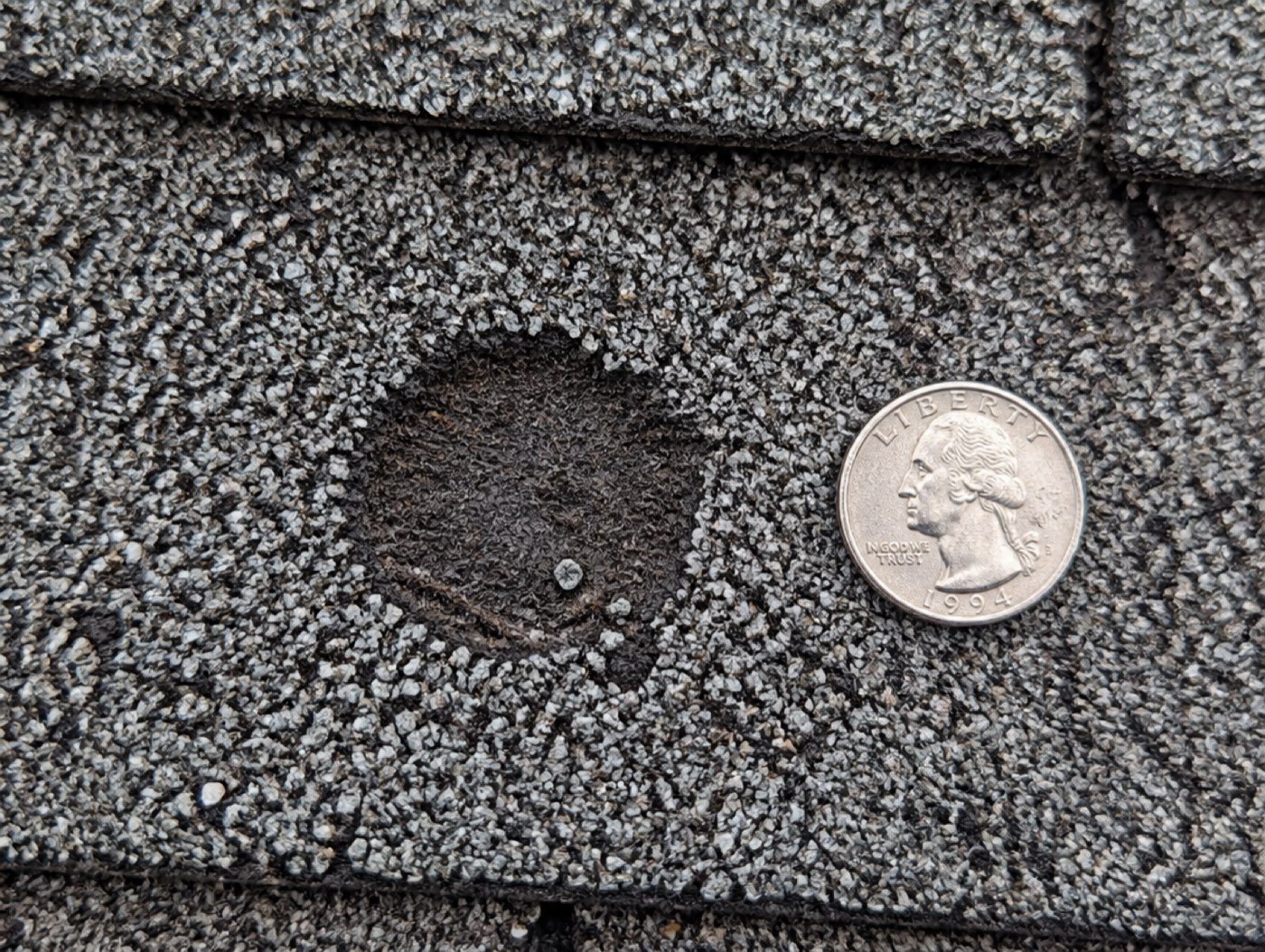
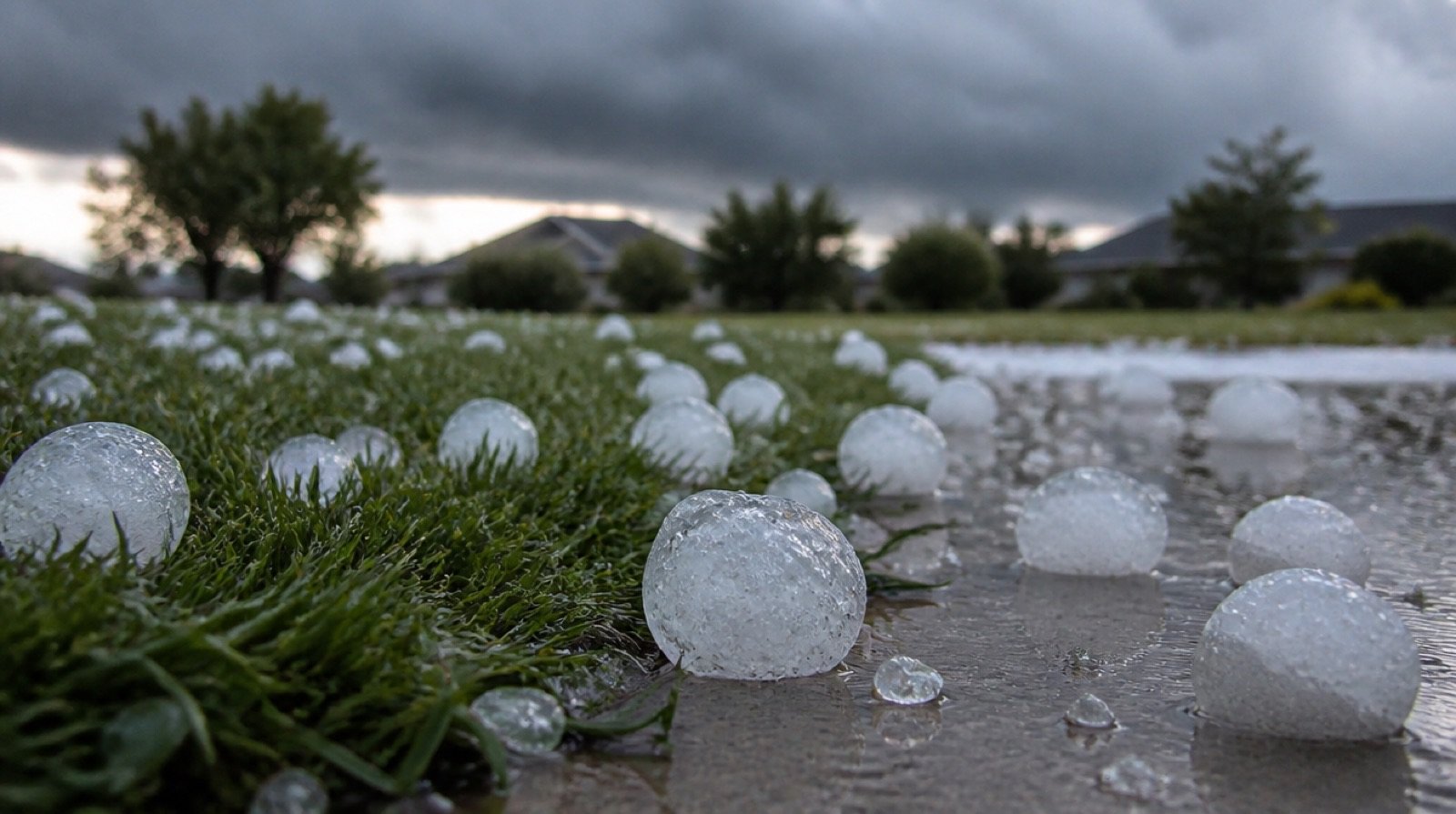
This is what a payable hail strike looks like. Most homeowners never see one up close.
What the alternatives cost
$249 once, and you keep every dollar you recover.
On a $50,000 roof claim, a public adjuster's fee is $7,500 to $12,500. That is not an argument against public adjusters. For big or complex claims they are often worth every cent, and we say exactly when.
| Public adjuster | $7,500 to $12,500 |
| Attorney, contingency | $16,500+ |
| A roofer's free claim guide | They want the roof |
| The Storm Claim File | $249 |
Attorney figure is illustrative of common first-party property practice and varies by state and firm. Public adjuster fees are capped by statute in some states.
Why believe this one
What we are not, in writing.
Not a roofing contractor. Not a public adjuster. Not a law firm. Not an insurer.
We take no percentage of any settlement, accept no referral fees from contractors or carriers, and run no affiliate advertising. The only money we make is the $249, which is identical whether your claim pays nothing or half a million dollars.
That last sentence is the whole point. Every other party advising you earns more when a particular decision gets made. We earn the same either way.
Fit
Do not buy this if it is not for you.
Buy it if
- You own and insure a home with real wind, hail or hurricane damage
- You are about to file, or you have an estimate that looks low
- The claim is big enough that a few thousand dollars matters
- You will spend a few hours reading and photographing
Do not buy it if
- You rent, or the property is commercial
- Your loss is flood, which is a separate federal policy entirely
- Your claim is already in litigation. Listen to your attorney
- You want it handled for you. That is a public adjuster's job, not ours
- You are hoping to claim damage a storm did not cause
The free Claim Position Check will tell you which of these you are in, and hides the buy button entirely if the answer is that we cannot help you.
Questions
The ones worth asking.
Is Storm Season Experts a public adjuster?
No. We are an independent publisher of educational material. We do not represent policyholders, do not contact insurers, do not negotiate or settle claims, and take no percentage of any settlement. Everything here is designed for you to use yourself, in your own name. Where representation is genuinely worth the fee, the material says so and explains how to find someone licensed in your state.
Will this guarantee my claim gets approved or paid more?
No, and any product that promises that is lying to you. Coverage depends on your policy, your state, your damage and your carrier. What this removes is the information gap: what the estimate actually says, which line items are commonly missing, which deadlines are running, and what the documented escalation path is. Whether that changes your specific outcome cannot be promised by anyone, which is exactly why the refund is unconditional.
How much does a public adjuster cost compared to this?
Typically 15 to 25 percent of settlement on claims between $10,000 and $50,000. On the average $17,000 wind and hail claim that is $2,550 to $4,250. On a $50,000 roof claim it is $7,500 to $12,500. Florida caps the fee at 10 percent for a declared state of emergency where the claim is made within one year, and 20 percent otherwise.
That is not an argument that public adjusters are bad value. For large or complex claims they frequently are worth it, and we set out exactly when.
I already filed and got an estimate. Is it too late?
Usually not. Supplements, reinspections and the appraisal clause all exist after an initial estimate, and recoverable depreciation is released after the work is done rather than before. What does expire is the suit limitation period in your policy, which is often shorter than your state's statute of limitations and runs from the storm, not the denial. The free deadline calculator will tell you where you stand in about a minute.
What do I actually receive, and in what format?
Immediately after purchase: the complete system on the web, readable on a phone at the kitchen table while an adjuster is on your roof. The whole guide as one clean printable PDF. The four worksheets as a fillable PDF you type straight into. The six letters as an editable Word document, because you will need to add your own line items. Access does not expire, and you should save a copy the day you buy it.
What is the refund, honestly?
Sixty days, unconditional, no questions and no forms. You do not have to prove you read it or that your claim failed. Email and it is reversed.
They do this every day. You get one shot at it.
The carrier already knows what a complete roof scope looks like. Once you do too, the conversation is a different conversation.
60-day unconditional refund. No calls, no subscription, no cut of your claim.